Upgrading Aria Automation without Lifecycle Manager: A Step-by-Step Guide

Upgrading Aria Automation (formerly known as vRealize Automation, vRA) is crucial for maintaining the efficiency, security, and compatibility of your automation tasks. For environments without VMware Aria Suite Lifecycle, you can still perform the upgrade using the vracli command-line utility. This blog post will guide you through the process of upgrading Aria Automation using two different methods: from a mounted ISO (CD-ROM) and from an online update repository URL. What You Need Before Upgrading Prerequisites SSH access to your Aria Automation appliance. Sufficient backup of your Aria Automation environment. Downloaded ISO for the Aria Automation upgrade, if using the CD-ROM method. Access to the Aria Automation appliance with root privileges. Upgrading from a Mounted ISO with vracli Method 1: Upgrading from a Mounted ISO (CD-ROM) Prepare the ISO Image: Before starting, ensure that the ISO image for the Aria Automation upgrade is downloaded and available. Mount the ISO to the Appliance: Mount the ISO image to your Aria Automation appliance. This step might require physical access to the server or through the management interface provided by your hypervisor (e.g., ESXi). To mount the CD-ROM we can use: mount /dev/sr0 /mnt/cdrom SSH into the Aria Automation Appliance: Access your appliance via SSH as the root user. Execute the Upgrade Command: Run the following command to start the upgrade process: vracli upgrade exec -y --profile lcm --repo cdrom:// This command will automatically start the upgrade process using the ISO mounted on the CD-ROM drive. The -y flag automates the acceptance of the upgrade process, and --profile lcm specifies the use of the lifecycle manager upgrade profile, even though the Lifecycle Manager itself is not being used. Monitor the Upgrade Process: The upgrade process will provide output to the console. Monitor this output for any errors or prompts that require manual intervention. Use 'vracli upgrade status --follow' to monitor the progress. Finalize the Upgrade: Once the upgrade completes, follow any on-screen instructions to finalize the upgrade. This may include rebooting the Aria Automation appliance. Upgrading from an Online Repository URL Method 2: Upgrading from an Online Update Repository URL SSH into the Aria Automation Appliance: Ensure you have SSH access to the appliance as the root user. Determine the Repository URL: Identify the URL of the update repository you intend to use for the upgrade. This URL should point to the VMware online repository or an internally hosted repository mirror. Execute the Upgrade Command: Use the following command to initiate the upgrade from the online repository: vracli upgrade exec --profile lcm -r <url> Replace <url> with the actual URL of your update repository. Similar to the CD-ROM method, --profile lcm indicates the lifecycle manager upgrade profile. Monitor the Upgrade Process: As with the ISO method, keep an eye on the console output for any actions required on your part. Use 'vracli upgrade status --follow' to monitor the progress. Complete the Upgrade: After the upgrade process finishes, perform any additional steps prompted by the system, which may include system reboots. Verifying the Upgrade Post-Upgrade Steps Verify the Upgrade: Log in to the Aria Automation user interface to verify that the upgrade was successful and all services are running correctly. Review Logs: Check the upgrade logs for any warnings or errors that might need attention. Test Deployments: Execute a few test deployments to ensure that all functionalities are working as expected. Final Thoughts Conclusion Upgrading Aria Automation without the Lifecycle Manager is straightforward with the vracli utility. Whether you’re upgrading from a mounted ISO or an online repository, the process is designed to be seamless. Always ensure that you have backups and a rollback plan in case of any issues. I also covered a release-specific run of this CLI method in upgrading Aria Automation to 8.18 via CLI.

February 14, 2024 · Cosmin Trif
Binary Mapping page in vRealize Suite Lifecycle Manager showing successful product binary mapping request.

Upgrading VMware Aria Automation to 8.14.1

In this post I will go over upgrading my 8.x vRA appliance to 8.14.1. As a pre requirement we do need to have VMware Aria Suite Lifecycle upgraded to 8.14. Instructions can be found here. The upgrade does not include the latest PSPACK that contains the 8.14.1 VMware Aria Automation release. Instructions to get the PSPACK can be found on my other blog post here. Downloading the 8.14.1 Upgrade Binaries To get started we can go to VMware Aria Suite Lifecycle -> Lifecycle Operations -> Settings -> Binary Mapping. (If you haven’t added your My VMware credentials you will need to do that first by going to VMware Aria Suite Lifecycle -> Lifecycle Operations -> Settings -> My VMware) ...

December 5, 2023 · Cosmin Trif
Upgrade wizard step for taking a snapshot during Aria Operations for Logs 8.14.1 upgrade.

Upgrading Aria Operations for Logs to 8.14.1 via VMware Aria Suite Lifecycle

In this post I will go over upgrading my 8.x vRLI appliance to Aria Operations for Logs 8.14.1 using VMware Aria Suite Lifecycle. As a pre requirement we do need to have VMware Aria Suite Lifecycle upgraded to 8.14. Instructions can be found here. The upgrade does not include the latest PSPACK that contains the 8.14.1 Aria Automation Config release. Instructions to get the PSPACK can be found on my other blog post here. ...

December 5, 2023 · Cosmin Trif
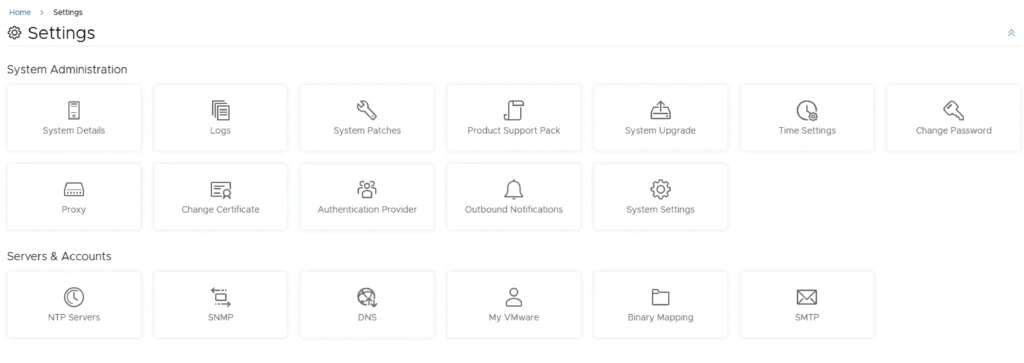
Settings page with options like System Details, Logs, and System Upgrade.

Upgrading VMware Aria Automation Config to 8.14.1

In this post I will go over upgrading my 8.x SSC appliance to 8.14.1. As a pre requirement we do need to have VMware Aria Suite Lifecycle upgraded to 8.14. Instructions can be found here. The upgrade does not include the latest PSPACK that contains the 8.14.1 Aria Automation Config release. Instructions to get the PSPACK can be found on my other blog post here. Mapping the Upgrade Binaries To get started we can go to VMware Aria Suite Lifecycle -> Lifecycle Operations -> Settings -> Binary Mapping. (If you haven’t added your My VMware credentials you will need to do that first by going to VMware Aria Suite Lifecycle -> Lifecycle Operations -> Settings -> My VMware) ...
December 5, 2023 · Cosmin Trif
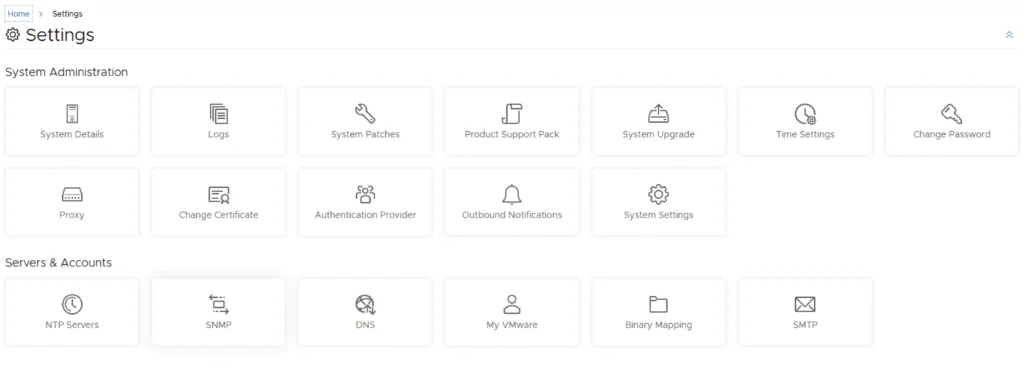
Settings page for VMware Aria Automation, showing options like System Details, Logs, and System Upgrade.

Upgrading VMware Aria Automation to 8.14

In this post I will go over upgrading my 8.x vRA appliance to 8.14. As a pre requirement we do need to have VMware Aria Suite Lifecycle upgraded to 8.14. Instructions can be found here. The upgrade already includes the latest Product Support Pack so an update to the Product Support Pack is not required. Downloading the Upgrade Binaries To get started we can go to VMware Aria Suite Lifecycle -> Lifecycle Operations -> Settings -> Binary Mapping. (If you haven’t added your My VMware credentials you will need to do that first by going to VMware Aria Suite Lifecycle -> Lifecycle Operations -> Settings -> My VMware) ...

October 26, 2023 · Cosmin Trif
Settings page with options for system administration and servers/accounts.

Upgrading VMware Aria Automation Config to 8.14

In this post I will go over upgrading my 8.x SSC appliance to 8.14. As a pre requirement we do need to have VMware Aria Suite Lifecycle upgraded to 8.14. Instructions can be found here. The upgrade already includes the latest Product Support Pack so an update to the Product Support Pack is not required. Mapping and Downloading the 8.14 Binaries To get started we can go to VMware Aria Suite Lifecycle -> Lifecycle Operations -> Settings -> Binary Mapping. (If you haven’t added your My VMware credentials you will need to do that first by going to VMware Aria Suite Lifecycle -> Lifecycle Operations -> Settings -> My VMware) ...

October 25, 2023 · Cosmin Trif

Overview of deploying a 3 tier app in vRA 8, Terraform, and Ansible

Introduction When it comes to deploying a three-tier application in Google Cloud Platform (GCP), there are several tools available, including vRealize Automation (vRA) 8, Terraform, and Ansible. Each tool has its own strengths and weaknesses, and choosing the right one for your project depends on several factors. In this blog post, we will compare these three tools and discuss how vRA 8 stands out as the best option for deploying a three-tier application in GCP. ...

March 7, 2023 · Cosmin Trif

Deploying a 3 tier app in GCP from vRA

Deploying a three-tier application is a common task for many organizations, and as more companies move to the cloud, it’s essential to understand how to deploy such applications in the cloud environment. In this blog post, we will explore how to deploy a three-tier application from vRealize Automation 8 in Google Cloud Platform (GCP) using a blueprint. GCP and vRA 8 Overview GCP Overview Google Cloud Platform (GCP) is a suite of cloud computing services offered by Google. It provides a wide range of services such as virtual machines, storage, and networking, among others, that can be used to deploy and run applications in the cloud. One of the advantages of using GCP is its high availability and scalability, which makes it an excellent option for deploying enterprise-grade applications. ...

March 7, 2023 · Cosmin Trif

Comparing vRealize Automation to Chef

vRealize Automation and Chef are both popular tools used in IT automation, but they approach automation in different ways. In this blog, we will compare vRealize Automation with Chef to help you understand their differences and similarities. vRealize Automation Overview What is vRealize Automation? vRealize Automation is an IT automation tool that enables the automation of the deployment and management of virtual infrastructure and applications. It helps organizations to streamline their IT processes and create more efficient workflows. vRealize Automation provides a single platform for IT teams to manage and automate the deployment of infrastructure and applications. ...

February 15, 2023 · Cosmin Trif

Comparing vRealize Automation to Jenkins

In the world of DevOps, automation tools are essential for managing infrastructure, applications, and processes. Two popular tools for automation are vRealize Automation and Jenkins. Both tools are designed to simplify and streamline processes, but they have different strengths and weaknesses. In this blog, we’ll compare vRealize Automation and Jenkins to help you decide which tool is right for your automation needs. vRealize Automation and Jenkins at a Glance What is vRealize Automation? vRealize Automation is a cloud automation tool developed by VMware. It is designed to automate the deployment and management of applications, infrastructure, and multi-cloud environments. vRealize Automation provides an end-to-end solution for automating infrastructure and application delivery across a hybrid cloud environment. ...

February 15, 2023 · Cosmin Trif