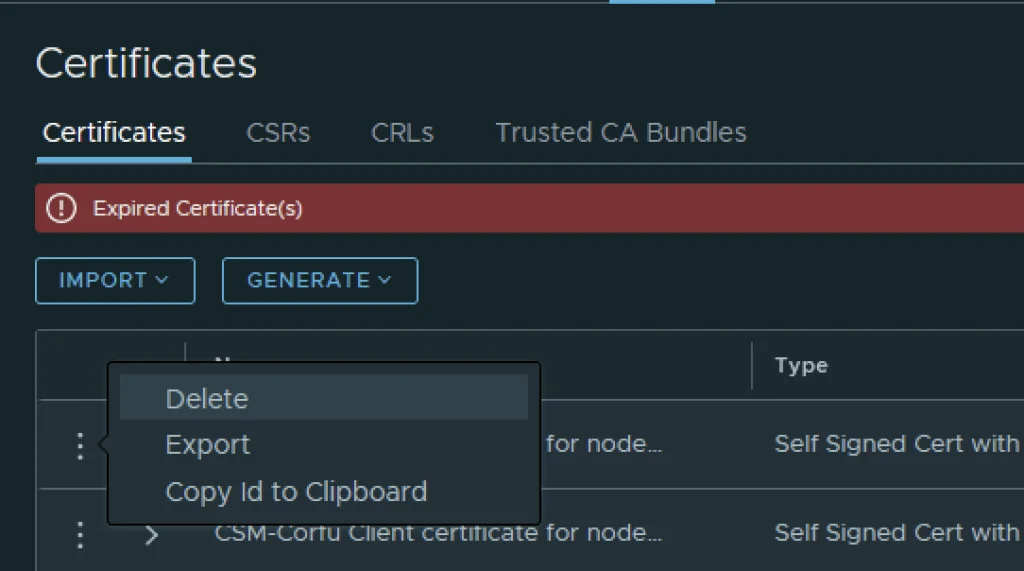
I replaced the expired CSM Corfu certificate in NSX by generating a self-signed certificate in the UI and sending the replacement through the API. I covered the same procedure for the MP Corfu certificate and the CCP Corfu certificate in separate posts.
The Expired CSM Corfu Certificate
In my case the CSM Corfu certificate has already expired

Generating a New Self-Signed Certificate
In the top menu bar I went to Generate -> Generate Self Signed Certificate
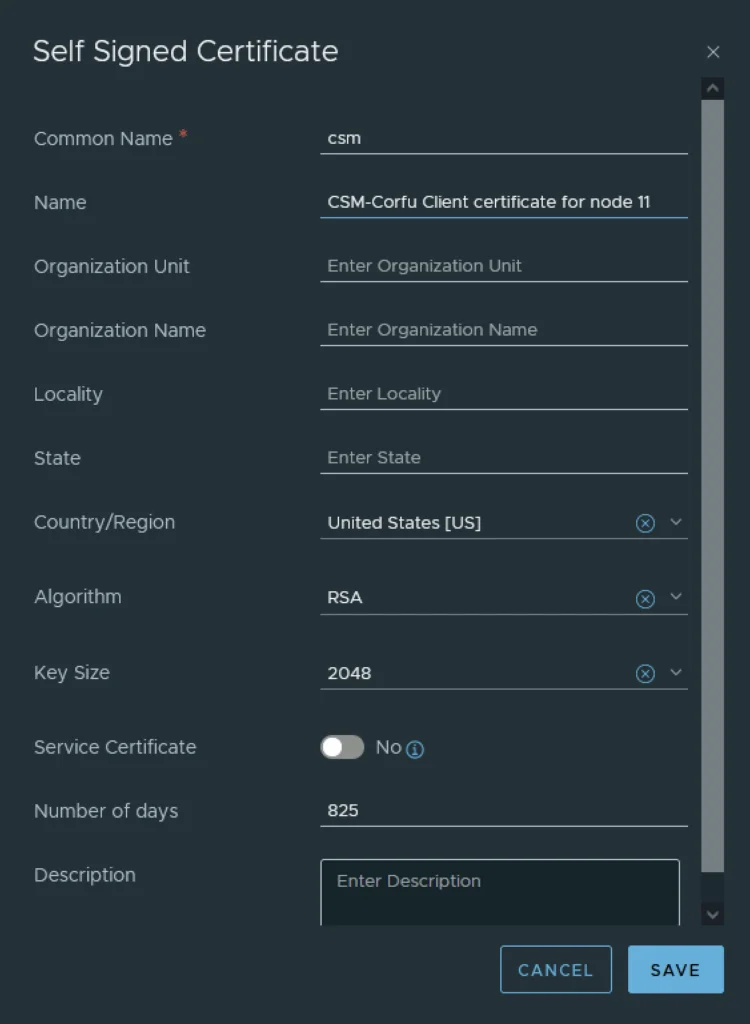
Next I had to grab the new certificate ID

Applying the Certificate via the NSX API
The next step is to replace the old certificate with the new certificate via an API call. For this I used Postman but any other tool could potentially be used.
The URL for the post call would go against https://nsx-vip-01a.corp.local/api/v1/trust-management/certificates/cert_id?action=apply_certificate&service_type=CBM_CSM&node_id=node_id
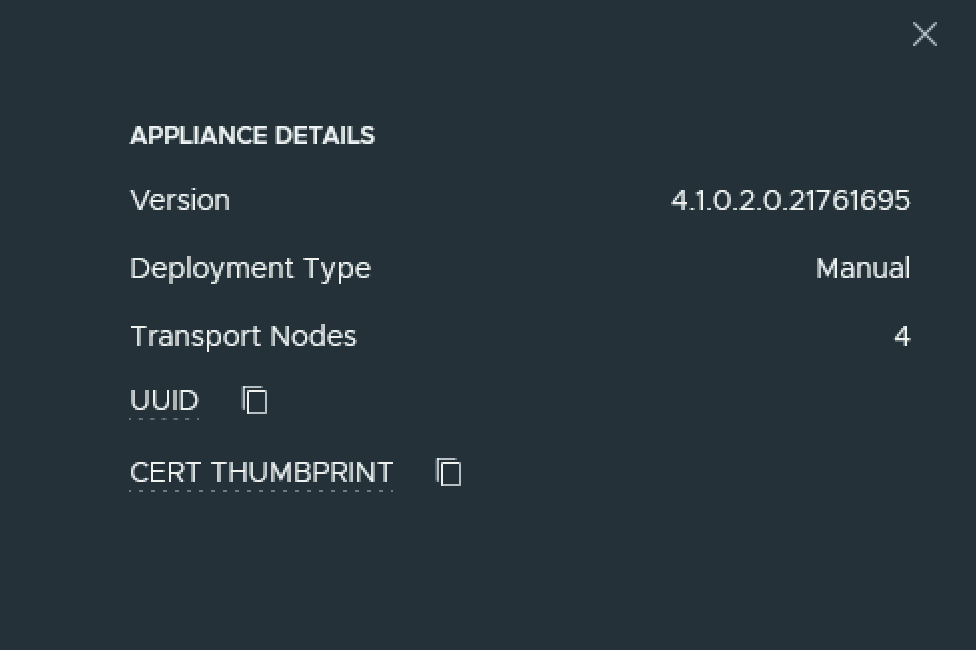
The node ID can be found under Appliances -> View details on node, the value to the right for UUID ex
For authentication I used basic, per best practices we should be using a token.
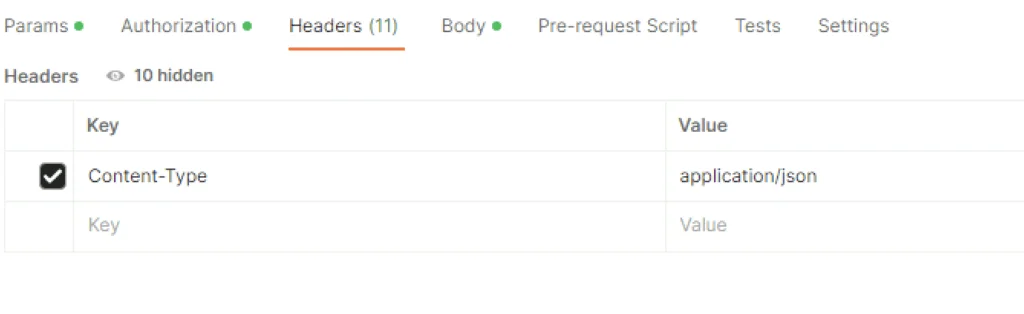
For headers had to add Content-Type application\json ex
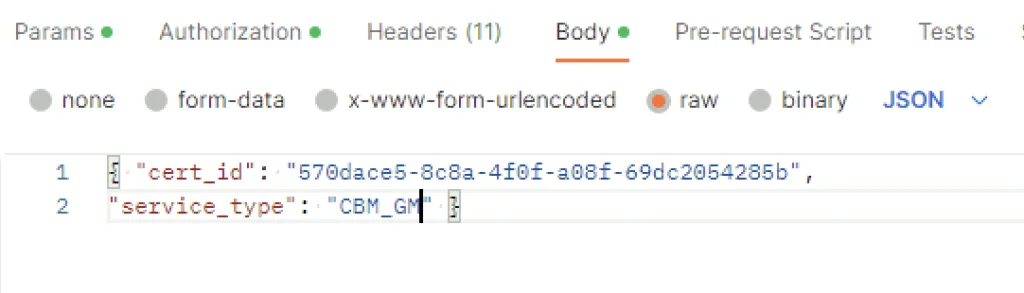
In the body I picked raw and added the following in
{ "cert_id": "65f3c890-485c-4c54-b80a-51cef8db7124",
"service_type": "CBM_CSM" }
The cert ID is from the certificate I generated earlier. ex
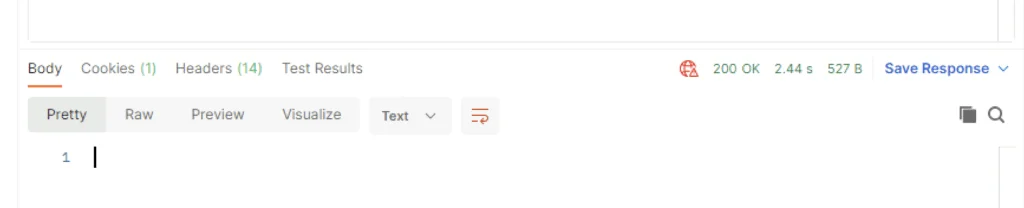
Once I clicked send I was presented back with a 200 OK
Verifying the New Certificate
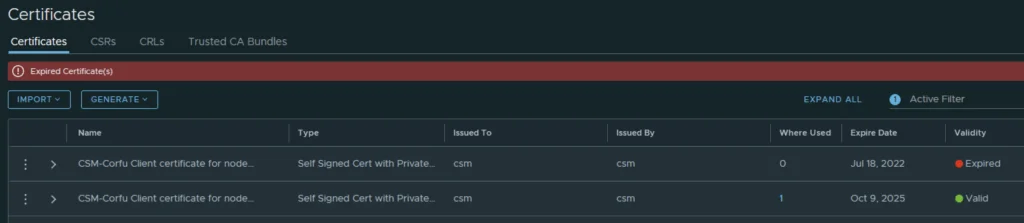
Going in the web browser I can also see that the new certificate is now used and the old one doesn’t have anything assigned to it ex
Deleting the Old Certificate
The final step I did was removing the old certificate by clicking on the 3 dots to left and picking delete from the menu. If the delete fails because the certificate is still in use by a node, see this fix.