Comparing vRealize Automation to Jenkins

In the world of DevOps, automation tools are essential for managing infrastructure, applications, and processes. Two popular tools for automation are vRealize Automation and Jenkins. Both tools are designed to simplify and streamline processes, but they have different strengths and weaknesses. In this blog, we’ll compare vRealize Automation and Jenkins to help you decide which tool is right for your automation needs. vRealize Automation and Jenkins at a Glance What is vRealize Automation? vRealize Automation is a cloud automation tool developed by VMware. It is designed to automate the deployment and management of applications, infrastructure, and multi-cloud environments. vRealize Automation provides an end-to-end solution for automating infrastructure and application delivery across a hybrid cloud environment. ...

Comparing vRealize Automation to Jenkins

Comparing vROps Workload Optimizations with CWOM

VMware vRealize Operations (vROps) is not the only tool available for managing the performance and capacity of virtual environments. Another solution that has gained popularity in recent years is the Cloud Workload Optimization Manager (CWOM). In this blog, we will compare vROps workload optimizations with CWOM to help organizations determine which solution is best suited for their needs. Functionality and Feature Depth Functionality vROps provides a comprehensive set of features for managing the performance and capacity of virtual environments. It includes advanced performance analytics, customized tagging and workload optimization, improved visibility, and cost savings. On the other hand, CWOM is a more specialized tool that focuses on optimizing resource utilization for cloud workloads. While CWOM has some similar features to vROps, it lacks the depth of functionality provided by vROps. Scalability for Large Environments Scalability vROps is designed to manage large, complex virtual environments and is highly scalable. It can support multiple vCenter servers, hundreds of thousands of virtual machines, and provide real-time performance data. CWOM, on the other hand, is designed for smaller cloud environments and may not be suitable for organizations with large virtual environments. Integration with the VMware Ecosystem Integration vROps integrates seamlessly with other VMware products and solutions, such as vCenter and NSX, to provide a unified view of the virtual environment. CWOM, on the other hand, is designed to work with specific cloud platforms and may not provide the same level of integration as vROps. Cost Considerations Cost vROps is a premium solution that is typically more expensive than CWOM. However, the comprehensive set of features provided by vROps and its ability to manage large, complex virtual environments can make it a more cost-effective solution in the long run. Choosing Between vROps and CWOM In conclusion, vROps workload optimizations provide a comprehensive solution for managing virtual environments, while CWOM is a specialized tool for optimizing resource utilization for cloud workloads. Organizations should consider their specific needs, the size and complexity of their virtual environment, and their budget when deciding between vROps and CWOM. ...
Comparing vROps Workload Optimizations with CWOM
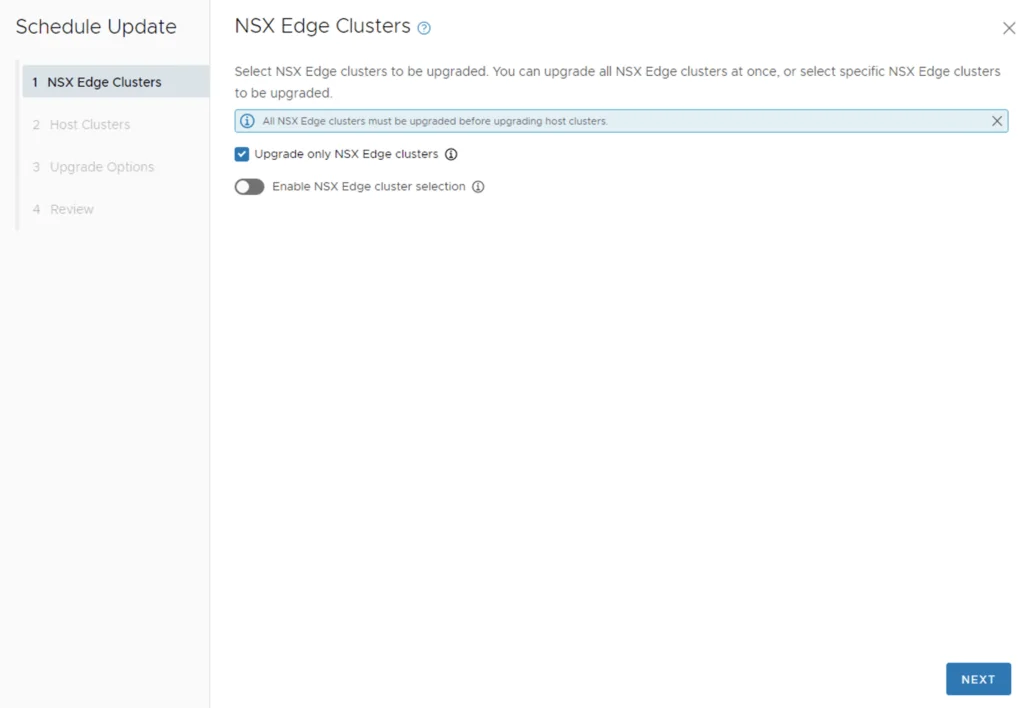
UI for selecting NSX Edge clusters during VCF upgrade wizard.

Upgrading VCF 4.4.0 to 4.5 Step by Step

With the release of of VCF 4.5 I wanted to get my lab upgraded. The release blog can be found here and the release notes are here Please note that some of the components within the VCF will still need additional upgrading. Please read the release notes for additional details. Downloading the VCF 4.5 Bundles We can start by going to Lifecycle Management -> Bundle management -> Download now. If you do not see the newest releases go to Administration -> Repository settings and add a VMware Customer Connect account that has access to perform downloads. ...

 · Updated  · 
Upgrading VCF 4.4.0 to 4.5 Step by Step
Azure portal search results for "azure vmware solution" showing services and marketplace options.

Deploying an AVS cluster on Azure

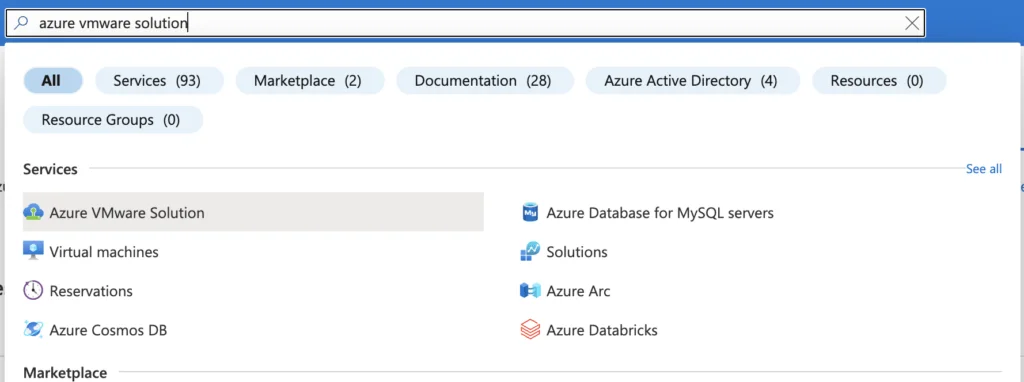
In this post we will go over the steps for deploying an AVS cluster on Azure. Finding Azure VMware Solution in the Azure Portal The first step was to log in to the azure portal at portal.azure.com. Once logged on we can search for “azure vmware solution” Then I tried to create a cluster by clicking on the Create button on the top left ...

 · Updated  · 
Deploying an AVS cluster on Azure
Bundle Management page showing VMware Cloud Foundation 4.4 update and drift bundle download status.

Skip-Level Upgrading VCF 4.x to 4.4.1 Step by Step

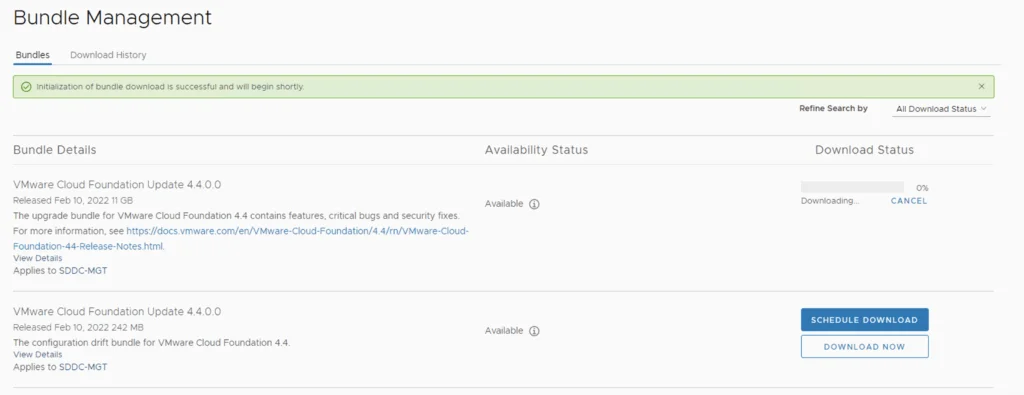
With the release of of VCF 4.4.1 I wanted to get my lab upgraded. The release blog can be found here and the release notes are here Downloading the VCF 4.4.1 Bundle In order to get to 4.4.1.0 in the past we had to upgrade to each version incrementally. As per the documentation found here we can now upgrade from any release past 4.1.0.1 directly to 4.4.1 skipping the releases in between. We can do so by going to Repository -> Bundle management -> Download now. ...

 · Updated  · 
Skip-Level Upgrading VCF 4.x to 4.4.1 Step by Step
Bundle Management screen showing VMware Cloud Foundation updates with download options.

Skip-Level Upgrading VCF 4.3.1 to 4.4 Step by Step

With the release of of VCF 4.4 I wanted to get my lab upgraded. The release blog can be found here and the release notes are here Downloading the VCF 4.4 Update Bundle In order to get to 4.3.1.0 in the past we had to upgrade to each version incrementally. As per the documentation found here we can now upgrade from any release past 4.1.0.1 directly to 4.4 skipping the releases in between. We can do so by going to Repository -> Bundle management -> Download now. ...

 · Updated  · 
Skip-Level Upgrading VCF 4.3.1 to 4.4 Step by Step

vROPS Cloud Proxy docker routing

I recently ran into a problem where I needed to route the subnet that is being used for the docker routing on the vROPS Cloud Proxy appliance. The network used is 172.17.0.0/16. For this we will try to route a portion of that subnet through my ethernet interface To test the configuration out without adding a persistent route I used the following command: ip route add 172.17.11.0/24 via 172.16.11.1 dev eth0 Verify that everything is running properly, if anything went wrong the route should get reverted on the next reboot. If the changes are successful we can add the route as persistent by editing the network configuration using vi: ...

vROPS Cloud Proxy docker routing
'Cloud Proxies' with 'NEW' button and 'Name' field.

Deploying the vROPS cloud proxy

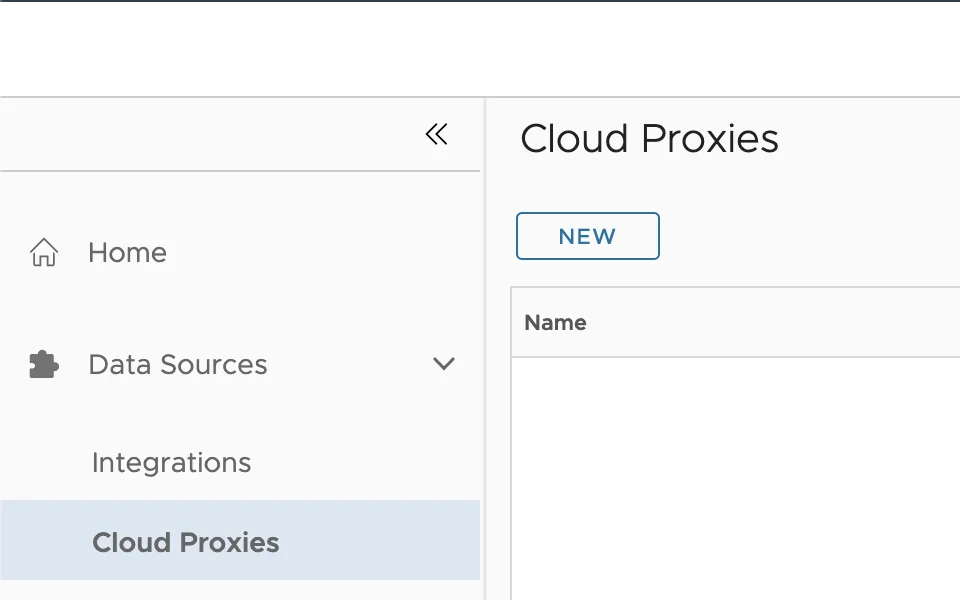
In this guide we will go over Deploying the vROPS cloud proxy for cloud as well as on premise. The official VMware documentation can be found here Getting the Cloud Proxy OVA and OTK Key To get started log in to your vROPS instance. If its cloud it would be something similar to https://www.mgmt.cloud.vmware.com/vrops-cloud/ui/index.action For on premise it would be https://vrops_url/ui/login.action Once you are logged on We can go to Data Sources -> Cloud Proxies and press on New. example: ...

Deploying the vROPS cloud proxy
vRealize Operations Manager Administration showing system status with cluster status as online and "Take Offline" button.

Workaround instructions to address CVE-2021-44228 and CVE-2021-45046 in vRealize Operations 7.x

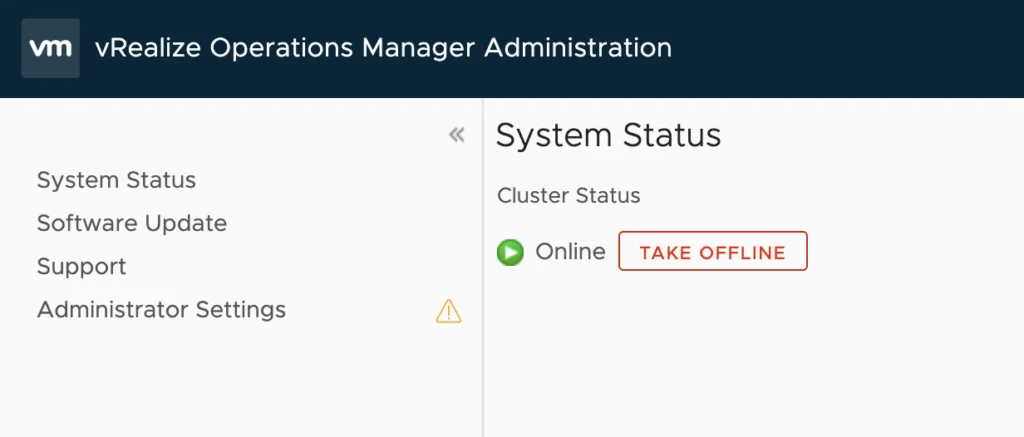
In this article I will go over one of the workaround instructions to address CVE-2021-44228 and CVE-2021-45046 in vRealize Operations 7.x. I have tested the workaround on vROPS 7.5 as its still shipped with VCF 3.x and I haven’t yet seen documentation on a workaround for this version. If you are looking for instructions for version 8.x consult kb article 87076. This has been tested on December 21 2021. Please check the official documentation or open a ticket for production usage. Where possible, moving to a release that ships with the fixed Log4j is the cleaner long-term option. I covered upgrading vROps to 8.6.2 via vRSLCM separately. ...

Workaround instructions to address CVE-2021-44228 and CVE-2021-45046 in vRealize Operations 7.x
VMware vRealize Operations interface with options for adding accounts and credentials, focusing on integrating data sources.

Creating a Credential (MongoDB) (TVS)

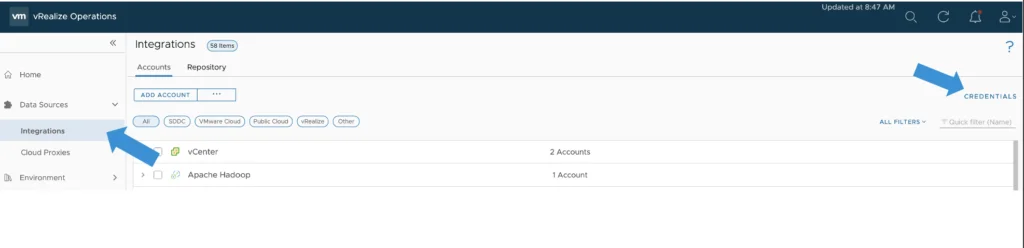
In this guide we will go over Creating a Credential for MongoDB in vROPS for the True Visibility Management pack. The original documentation was posted here however it hasn’t yet been updated to vROPS 8.6 and the new vROPS cloud. Procedure From the Left navigation bar, select Data Sources -> Integrations -> Credentials Click the Add button on the top left. In the Manage Credential window that appears, select whether or not authentication is required for your MongoDB environment, then enter the information indicated below: ...

Creating a Credential (MongoDB) (TVS)