Settings page with options for system administration and servers/accounts, relevant for VMware Aria Operations upgrade.

Upgrading VMware Aria Operations to 8.14 via VMware Aria Suite Lifecycle

In this post i will go over upgrading my 8.x vROPS appliance to 8.14 using VMware Aria Suite Lifecycle. As a pre requirement we do need to have vRSLCM (vRealize Lifecycle Manager) upgraded to 8.14 Instructions can be found here. The upgrade already includes the latest Product Support Pack so an update to the Product Support Pack is not required. To get started we can go to VMware Aria Suite Lifecycle -> Lifecycle Operations -> Settings -> Binary Mapping. (If you haven’t added your My VMware credentials you will need to do that first by going to VMware Aria Suite Lifecycle -> Lifecycle Operations -> Settings -> My VMware) ...

October 25, 2023 · Cosmin Trif
Settings page with options for system administration and servers/accounts.

Upgrading Aria Operations for Logs to 8.14 via VMware Aria Suite Lifecycle

In this post i will go over upgrading my 8.x vRLI appliance to Aria Operations for Logs 8.14 using VMware Aria Suite Lifecycle. As a pre requirement we do need to have VMware Aria Suite Lifecycle upgraded to 8.14. Instructions can be found here. The upgrade already includes the latest Product Support Pack so an update to the Product Support Pack is not required. To get started we can go to VMware Aria Suite Lifecycle -> Lifecycle Operations -> Settings -> Binary Mapping. (If you haven’t added your My VMware credentials you will need to do that first by going to vRealize Lifecycle Manager -> Lifecycle Operations -> Settings -> My VMware) ...

October 25, 2023 · Cosmin Trif

VMware Aria Operations Compliance Pack for HIPAA

I was trying to find some documentation around the metrics monitored by the VMware Aria Operations Compliance Pack for HIPAA. Since VMware is now including the management pack as a native solution as of vRealize Operations 8.1 I wasn’t able to find allot of documentation around it so I exported the symptoms monitored. Here is a list of the symptoms from version 8.10 HIPAA 164.312(c)(1) - Integrity - NTP time synchronization service is not configured on the host HIPAA 164.312(a)(1) - Access Control - Count of maximum failed login attempts is nto set HIPAA 164.312(c)(1) - Integrity - launchmenu feature is enabled HIPAA 164.312(c)(1) - Integrity - Unity taskbar feature is enabled HIPAA 164.312(c)(1) - Integrity - Shellaction is enabled HIPAA 164.312(c)(1) - Integrity - Independent nonpersistent disks are being used HIPAA 164.312(a)(1) - Access Control - Default setting for intra-VM TPS is incorrect HIPAA 164.312(c)(1) - Integrity - NTP Server is not configured to startup with the host HIPAA 164.312(a)(1) - Access Control - Dvfilter network APIs is nto configured to prevent unintended use HIPAA 164.312(a)(1) - Access Control - HGFS file transfers are enabled HIPAA 164.312(b) - Audit Control - Persistent logging is not configured for ESXi host HIPAA 164.312(c)(1) - Integrity - Toprequest feature is enabled HIPAA 164.312(b) - Audit Control - Remote logging for ESXi hosts is not configured HIPAA 164.312(c)(1) - Integrity - PCI pass through device is configured on the virtual machine HIPAA 164.312(c)(1) - Integrity - Bios Boot Specification feature is enabled HIPAA 164.312(a)(1) - Access Control - Timeout to automatically terminate idle sessions is not configured HIPAA 164.312(a)(1) - Access Control - Access to VM console is not controlled via VNC protocol HIPAA 164.312(a)(1) - Access Control - VIX messages are enabled on the VM HIPAA 164.312(c)(1) - Integrity - Protocolhandler feature is enabled HIPAA 164.312(a)(1) - Access Control - Copy/paste operations are enabled HIPAA 164.312(c)(1) - Integrity - Tray icon feature is enabled HIPAA 164.312(a)(1) - Access Control - GUI Copy/paste operations are enabled HIPAA 164.312(c)(1) - Integrity - version get feature is enabled HIPAA 164.312(c)(1) - Integrity - Informational messages from the VM to the VMX file are not limited HIPAA 164.312(a)(1) - Access Control - Timeout value for DCUI is not configured HIPAA 164.312(a)(1) - Access Control - Guests can recieve host information HIPAA 164.312(c)(1) - Integrity - Users and processes without privileges can remove, connect and modify devices HIPAA 164.312(c)(1) - Integrity - NTP time synchronization server is not configured HIPAA 164.312(c)(1) - Integrity - Unity active feature is enabled HIPAA 164.312(c)(1) - Integrity - Autologon feature is enabled HIPAA 164.312(a)(1) - Access Control - drag-n-drop - Copy/paste operations are enabled HIPAA 164.312(c)(1) - Integrity - Intra VM Transparent Page Sharing is Enabled HIPAA 164.312(c)(1) - Integrity - GetCreds feature is enabled HIPAA 164.312(a)(1) - Access Control - Time after which a locked account is automatically unlocked is not configured HIPAA 164.312(c)(1) - Integrity - Versionset feature is enabled HIPAA 164.312(a)(1) - Access Control - Auto install of tools is enabled HIPAA 164.312(a)(1) - Access Control - Access to DCUI is not set to allow trusted users to override lockdown mode HIPAA 164.312(a)(1) - Access Control - Access to VMs are not controlled through dvfilter network APIs HIPAA 164.312(a)(1) - Access Control - Copy/paste operations are enabled HIPAA 164.312(a)(1) - Access Control - Managed Object Browser (MOB) is enabled HIPAA 164.312(c)(1) - Integrity - Trash folder state is enabled HIPAA 164.312(c)(1) - Integrity - Unity feature is enabled HIPAA 164.312(a)(1) - Access Control - Timeout is not set for the ESXi Shell and SSH services HIPAA 164.312(c)(1) - Integrity - Image Profile and VIB Acceptance Levels are not configured to desired level HIPAA 164.312(c)(1) - Integrity - Firewall is not configured for NTP service HIPAA 164.312(c)(1) - Integrity - Unity push feature is enabled HIPAA 164.312(c)(1) - Integrity - Users and processes without privileges can connect devices HIPAA 164.312(c)(1) - Integrity - Memsfss feature is enabled HIPAA 164.312(c)(1) - Integrity - Unity Interlock is enabled HIPAA 164.312(c)(1) - Integrity - Unity window contents is enabled HIPAA 164.312(e)(1) - Transmission Security - NFC on the vCenter is not configured for SSL HIPAA 164.312(e)(1) - Transmission Security - Restrict port-level configuration overrides on VDS HIPAA 164.312(c)(1) - Integrity - Virtual disk shrinking wiper is enabled HIPAA 164.312(c)(1) - Integrity - Virtual disk shrinking is enabled HIPAA 164.312(e)(1) - Transmission Security - The Forged Transmits policy is not set to reject HIPAA 164.312(e)(1) - Transmission Security - MAC Address Changes policy is set to reject HIPAA 164.312(e)(1) - Transmission Security - SNMP Server is running on the host HIPAA 164.312(e)(1) - Transmission Security - The Promiscuous Mode policy is not set to reject HIPAA 164.312(d) - Person or Entity Authentication - Active directory is not used for local user authentication HIPAA 164.312(e)(1) - Transmission Security - Host firewall is not configured to restrict access HIPAA 164.312(e)(1) - Transmission Security - BPDU filter is not enabled on the host HIPAA 164.312(e)(1) - Transmission Security - The MAC Address Changes policy is not set to reject HIPAA 164.312(d) - Person or Entity Authentication - Password policy for password complexity is not set HIPAA 164.312(e)(1) - Transmission Security - VDS network healthcheck for Teaming Health Check is enabled HIPAA 164.312(d) - Person or Entity Authentication - Bidirection CHAP auhtentication is not enabled HIPAA 164.312(e)(1) - Transmission Security - Forged Transmits policy is set to reject HIPAA 164.312(e)(1) - Transmission Security - Promiscuous Mode policy is configured to reject

March 30, 2023 · Cosmin Trif

Comparing vROps Workload Optimizations with CWOM

VMware vRealize Operations (vROps) is not the only tool available for managing the performance and capacity of virtual environments. Another solution that has gained popularity in recent years is the Cloud Workload Optimization Manager (CWOM). In this blog, we will compare vROps workload optimizations with CWOM to help organizations determine which solution is best suited for their needs. Functionality vROps provides a comprehensive set of features for managing the performance and capacity of virtual environments. It includes advanced performance analytics, customized workload optimizations, improved visibility, and cost savings. On the other hand, CWOM is a more specialized tool that focuses on optimizing resource utilization for cloud workloads. While CWOM has some similar features to vROps, it lacks the depth of functionality provided by vROps. Scalability vROps is designed to manage large, complex virtual environments and is highly scalable. It can support multiple vCenter servers, hundreds of thousands of virtual machines, and provide real-time performance data. CWOM, on the other hand, is designed for smaller cloud environments and may not be suitable for organizations with large virtual environments. Integration vROps integrates seamlessly with other VMware products and solutions, such as vCenter and NSX, to provide a unified view of the virtual environment. CWOM, on the other hand, is designed to work with specific cloud platforms and may not provide the same level of integration as vROps. Cost vROps is a premium solution that is typically more expensive than CWOM. However, the comprehensive set of features provided by vROps and its ability to manage large, complex virtual environments can make it a more cost-effective solution in the long run. In conclusion, vROps workload optimizations provide a comprehensive solution for managing virtual environments, while CWOM is a specialized tool for optimizing resource utilization for cloud workloads. Organizations should consider their specific needs, the size and complexity of their virtual environment, and their budget when deciding between vROps and CWOM. ...

February 7, 2023 · Cosmin Trif

Benefits of Using vROps Workload Optimizations Over Regular DRS

VMware vRealize Operations (vROps) is a comprehensive solution for managing the performance and capacity of virtual environments. It offers several workload optimizations to help administrators balance resource utilization, meet SLAs, and ensure optimal performance. These optimizations go beyond what is possible with traditional Distributed Resource Scheduler (DRS) and can provide numerous benefits to organizations. In this blog, we will explore some of the advantages of using vROps workload optimizations over regular DRS. ...

February 7, 2023 · Cosmin Trif

vROPs tagging and workload optimization

Optimizing workloads in a custom datacenter with multiple clusters is a challenging task that requires a comprehensive understanding of the underlying infrastructure and the applications running on it. One of the key components of this optimization process is proper tagging using vRealize Operations Manager (vROPs). Tagging in vROPs is a process of assigning metadata to objects such as virtual machines, hosts, and clusters. This metadata provides context to the objects and helps to categorize them based on their characteristics, making it easier to manage and monitor the infrastructure. ...

January 30, 2023 · Cosmin Trif

vROPs DRS requirements across multiple data centers

vSphere Resource Management with vRealize Operations (vROPs) DRS across multiple data centers is a critical requirement for managing large-scale virtualized environments. In this blog, we’ll discuss the requirements for using DRS in vROPs across multiple data centers. Cross vCenter vMotion (CVC-vMotion) Support: CVC-vMotion enables vMotion of virtual machines across multiple vCenter servers. This capability is a pre-requisite for vROPs DRS across multiple data centers. vCenter Server 6.7 Update 1 or later: vROPs DRS across multiple data centers requires vCenter Server 6.7 Update 1 or later. This ensures that the necessary APIs are available to enable vROPs to manage resources across multiple vCenter servers. Network Connectivity: All data centers should have a reliable and high-speed network connectivity, with the necessary firewall ports opened for communication between vCenter servers and vROPs instances. vROPs Replication: vROPs instances in different data centers must be able to communicate with each other. vROPs replication can be used to keep the data in all vROPs instances in sync, ensuring that the vROPs DRS decisions are based on consistent data. Same vROPs version: All vROPs instances must be running the same version of vROPs to ensure compatibility and prevent any issues with data consistency. Same vROPs license: All vROPs instances must be licensed with the same vROPs license, and the license should include the vROPs DRS capability. Cluster Configuration: The virtual machines that need to be managed by vROPs DRS must be in a vSphere cluster that spans across multiple vCenter servers. The vSphere cluster must be configured with the appropriate DRS settings, such as automated DRS, to ensure that vROPs DRS can make effective resource management decisions. In conclusion, vROPs DRS across multiple data centers is a powerful tool for managing virtualized environments at scale. By following these requirements, organizations can ensure that their vROPs DRS implementation is effective, efficient, and reliable. ...

January 30, 2023 · Cosmin Trif

DRS Rules in vROPs and vCenter

The Distributed Resource Scheduler (DRS) is a key component of the vSphere platform, and is used to manage resource allocation and workload distribution within virtualized data centers. DRS works by analyzing resource utilization and workload demands of virtual machines (VMs) and making recommendations for placement and resource allocation based on a set of rules. In the context of vRealize Operations Manager (vROps), DRS rules play an important role in ensuring optimal performance and utilization of virtualized resources. By using vROps, administrators can monitor resource utilization and workload demands in real-time, and make informed decisions about resource allocation based on this data. ...

January 30, 2023 · Cosmin Trif

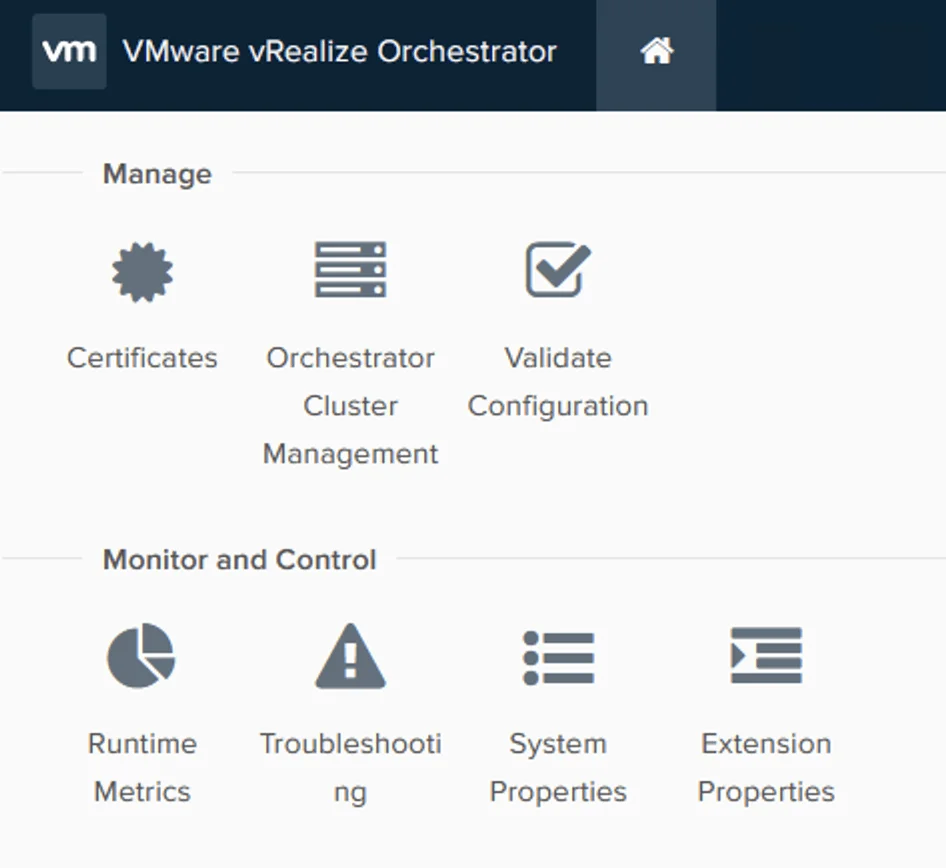
Enabling Basic authentication in VMware Orchestrator

VMware Orchestrator is a powerful automation platform for administrators. In order to secure the access to the Orchestrator, it is recommended to use Single Sign-On (SSO) authentication. However, there may be instances where SSO is not available and you need to use basic authentication instead (ex: Aria Operations plugin). In this case, you can set the value of com.vmware.o11n.sso.basic-authentication.enabled property to true. Here are the steps to set com.vmware.o11n.sso.basic-authentication.enabled value in VMware Orchestrator: ...

January 29, 2023 · Cosmin Trif
The image shows a dashboard with services like Lifecycle Operations, Locker, Identity and Tenant Management, Content Management, Marketplace, and vRealize Cloud.

Installing an vROPS management pack via vRSLCM

This post we will be going over installing an vROPS management pack via vRSLCM. (If you haven’t added your My VMware credentials you will need to do that first by going to vRealize Lifecycle Manager -> Lifecycle Operations -> Settings -> My VMware) Once logged on to vRSLCM click on the marketplace. ...

April 2, 2022 · Cosmin Trif